The Remote Northern
Path to Uhuru Peak.
The only route approaching Kilimanjaro from the north. Experience true wilderness, lower rainfall, and exceptional wildlife encounters before descending via the Marangu trail.
Rongai Route
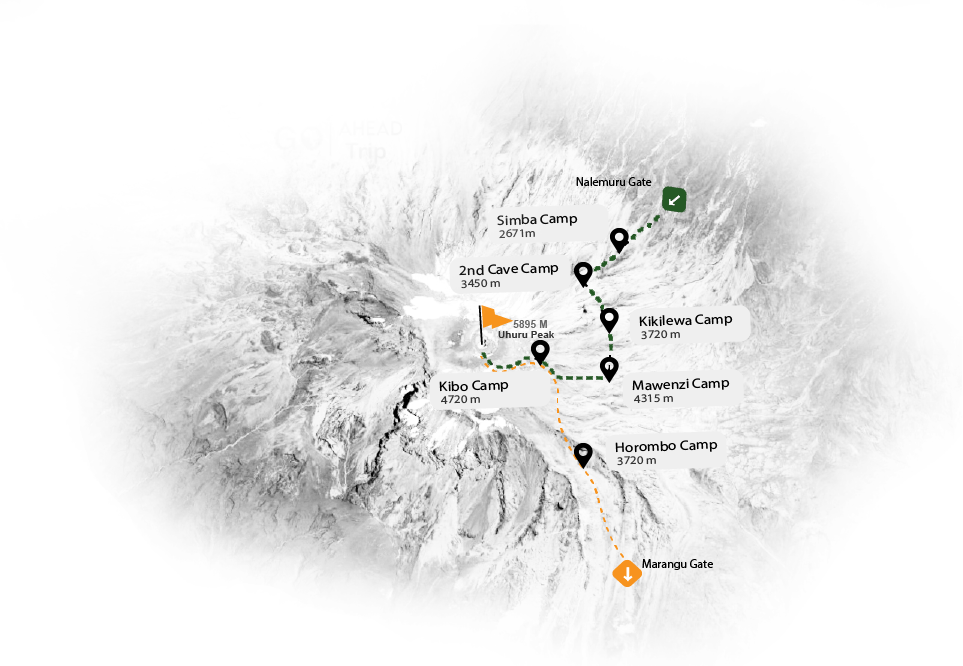
The Rongai route is the only path that approaches Mount Kilimanjaro from the north, near the Kenyan border. This unique starting point offers a true wilderness experience, far removed from the busier southern and western trails. The journey begins with a gradual ascent through unspoiled pine forests and farmlands, where you are far more likely to encounter wildlife, such as Colobus monkeys and even elephants, than on any other route.
One of Rongai's greatest advantages is its microclimate. Because it's situated on the northern side of the mountain, it receives significantly less precipitation. This makes Rongai the absolute best choice if you are trekking during the rainy seasons (April-May or November). The drier conditions mean clearer skies, better visibility, and a more comfortable climb when other routes might be bogged down in rain or mud.
Another unique feature is its dual-sided perspective. After ascending through the remote northern wilderness and crossing the desolate saddle between Mawenzi and Kibo peaks, you will summit and then descend via the Marangu route on the mountain's southeast side. This allows you to experience two completely different ecosystems and see Kilimanjaro from almost every angle during your expedition.
Expert Recommendations:
The Northern Wilderness
The Rongai route is the hidden gem of Kilimanjaro. It offers a completely different mountain experience defined by solitude, wildlife, and a forgiving ascent profile. Here's why our experts love it.
The Northern Approach
It is the only route that begins on the Kenyan side of the mountain. This logistical difference means the trails are significantly less crowded, offering a peaceful, introspective start to your trek.
Drier Climate
The northern slopes lie in a rain shadow. If you plan to climb during the wet seasons or shoulder months, Rongai offers the driest conditions and the clearest views of the peak.
Wildlife Encounters
Because the lower slopes are less populated by trekkers, wildlife thrives here. It's the most likely route for spotting Colobus monkeys in the canopy and, occasionally, larger game on the lower plains.
Gradual, Forgiving Ascent
Unlike the steep climbs of Machame or the ups-and-downs of Lemosho, Rongai has a steady, gradual incline. It is less taxing on the knees and an excellent option for those with less backpacking experience.
The Mawenzi Tarn
The 7-day variation spends a crucial acclimatization night at Mawenzi Tarn (4,315m), situated in a spectacular cirque directly beneath the towering, jagged spires of Mawenzi Peak.
A Dual-Sided Experience
Because you ascend from the north and descend via the Marangu route in the southeast, you get to see both sides of Kilimanjaro, effectively completing a half-traverse of the mountain.
.jpg)
.jpg)
.jpg)
.jpg)
The Path to Uhuru Peak
Success on Kilimanjaro is a marathon, not a sprint. Proper acclimatization is the key to reaching the roof of Africa safely and enjoyably.
Detailed Daily Program
We offer two variations of our Lemosho expedition. We strongly recommend the 8-day option for its superior acclimatization profile and higher success rate.
Day 01 Rongai Gate to Simba Camp
After registering at the Marangu Gate, we drive to the Rongai Gate near the Kenyan border to begin our trek. The trail winds through attractive pine forests and farmlands before entering the true wilderness of the high altitude rainforest. It is a steady, gentle ascent, and you have a high chance of spotting Colobus monkeys in the canopy before arriving at Simba Camp for your first night.
Day 02 Simba Camp to Second Cave
We leave the forest behind and enter the heath and moorland zone. The trek is relatively short and continues on a gradual incline, allowing for excellent acclimatization. You will enjoy spectacular, unobstructed views of Kibo (the summit cone) and the eastern ice fields as we make our way to the Second Cave Camp for a hot lunch and a relaxed afternoon.
Day 03 Second Cave to Kikelewa Camp
Today we leave the main trail and strike out across the moorland towards the jagged peaks of Mawenzi. The trail undulates through the heather, crossing several small valleys. The landscape is dotted with giant senecios and lobelias. We arrive at Kikelewa Camp, situated in a sheltered valley adorned with giant senecios, offering a beautiful setting for the night.
Day 04 Kikelewa Camp to Mawenzi Tarn
A short but steep climb takes us up grassy slopes, offering magnificent panoramas of the Kenyan plains below. We leave the vegetation behind as we enter the alpine desert zone. Our destination is Mawenzi Tarn Camp, spectacularly situated in a cirque directly beneath the towering, jagged spires of Mawenzi Peak. The afternoon is free to rest or explore the surrounding ridges for acclimatization.
Day 05 Mawenzi Tarn to Kibo Hut
We cross the desolate and vast "Saddle," the lunar-like alpine desert situated between the peaks of Mawenzi and Kibo. This stark, expansive landscape is eerily quiet. We reach Kibo Hut at the foot of the crater wall by early afternoon. You will have an early dinner and try to sleep, as the final push to the summit begins around midnight. The atmosphere at camp is focused and quiet.
Day 06 Kibo Hut to Summit to Horombo
We begin our midnight ascent via a very steep, heavy scree path to Gilman's Point (5,681m) on the crater rim. This is the most demanding part of the route. After a short rest and watching a glorious sunrise, we continue along the rim past Stella Point to Uhuru Peak, the Roof of Africa. After celebrating, we descend rapidly back to Kibo Hut for lunch, and then continue down to the warmer, oxygen-rich Horombo Hut to sleep.
Day 07 Horombo Hut to Marangu Gate
Your final day is a steady descent through the beautiful moorland and lush mountain rainforest of the Marangu route. The air becomes thick and rich with oxygen. Upon reaching the Marangu Gate, you will receive your well-earned summit certificates. You will say a final goodbye to your incredible crew and board the vehicle back to Arusha for celebration and rest.
Day 01 Rongai Gate to Simba Camp
We begin with a scenic drive to the remote northern edge of Kilimanjaro. After checking in at the Rangers post at Rongai Gate, we start our trek. The trail gradually winds through vibrant agricultural fields and pine forests into wilder terrain. It is a stunning, quiet path where wildlife sightings are much more common than on southern routes. We arrive at Simba Camp in the late afternoon.
Day 02 Simba Camp to Second Cave
Rising above the tree line, we emerge onto the vast moorland zone. The trek today is relatively easy and relaxed, allowing you to enjoy the increasing panoramic views of the Kenyan plains behind you and the towering Kibo peak ahead. The trail is mostly flat with a slight, gradual incline. We reach Second Cave Camp by early afternoon.
Day 03 Second Cave to Third Cave
The 6-day itinerary bypasses Mawenzi Tarn and heads steadily upward towards the saddle. The trail traverses across the rocky, arid terrain of the upper moorland. As we approach Third Cave Camp, the vegetation thins out dramatically, and the temperature drops. This camp sits just below the saddle, providing spectacular, unobstructed sunset views of Kibo.
Day 04 Third Cave to Kibo Hut
Today we ascend directly towards Kibo, traversing the expansive, lunar-like saddle that connects the two main peaks. The altitude is noticeable, so we walk slowly (Pole Pole). By early afternoon, we arrive at Kibo Hut. The rest of the day is spent resting and mentally preparing for the midnight summit bid, and attempting to sleep in the thin air before a very early wake-up call.
Day 05 Kibo Hut to Summit to Horombo
At midnight, we begin the steep, grueling ascent up scree slopes to the crater rim at Gilman's Point. From there, it's a final push along the snowy rim to Uhuru Peak. After celebrating, we descend down to Kibo Hut for lunch, then continue our long descent on the Marangu route to Horombo Hut for a well-deserved sleep.
Day 06 Horombo Hut to Marangu Gate
Our final day is a beautiful, easy descent through the heath zone and deep into the lush rainforest. We reach Marangu Gate by early afternoon, collect our summit certificates, tip our incredible support team, and return to our hotel for a massive celebration.
Enquire Now
Planning your Lemosho expedition? Our experts are here to help you customize your trek.
What's Included
- Professional, Kilimanjaro-certified English-speaking mountain guides.
- Team of skilled porters and a professional cook to prepare all meals.
- All National Park gate fees, camping fees, and trekking permits.
- Full board on the trek: nutritious breakfast, lunch, and dinner.
- High-quality camping equipment (tents, mess tents, and sleeping mats).
- Emergency rescue fees (AMREF) and first-aid kits including oxygen.
- Arusha airport transfers and transport to/from the park gate.
What's Excluded
- International flights and airport taxes.
- Entry visas for Tanzania (obtainable at the airport).
- Personal trekking gear (sleeping bags, poles, hiking boots).
- Tips for the mountain crew (customary but optional).
- Travel and medical insurance (highly recommended).
- Alcoholic beverages and items of a personal nature.
Lemosho Route FAQs
Everything you need to know about trekking the most scenic route on Kilimanjaro.
How difficult is the Lemosho Route?
Lemosho is considered more difficult than Marangu but offers superior acclimatization. It features steep sections like the Barranco Wall, but the 8-day itinerary has one of the highest success rates on the mountain.
What is the success rate for Lemosho?
Our 8-day Lemosho trek maintains a 95%+ success rate. The extra time on the mountain allows for optimal red blood cell production, significantly reducing altitude-related risks.
Do I need technical climbing skills?
No. Kilimanjaro is a non-technical trek. While sections like the Barranco Wall involve light scrambling, no specialized rope or ice climbing skills are required.
How cold does it get at night?
At high camps, temperatures often drop to -10°C to -15°C (5°F to -5°F). We provide high-altitude insulated tents, but a quality four-season sleeping bag is essential.
What happens if I get altitude sickness?
Our guides monitor your oxygen saturation daily. If serious symptoms occur, our protocol is immediate descent. We carry backup oxygen tanks and have AMREF flying doctor rescue coverage for all treks.
Why choose 8 days over 7?
The 8th day is a dedicated acclimatization day on the Shira Plateau. This extra day is often the difference between reaching the summit comfortably and being forced to descend due to sickness.