Conquer the
Roof of Africa.
Embark on an unforgettable journey to the summit of Mount Kilimanjaro. Experience the thrill of climbing Africa's highest peak with expert guides and premium support.
Start Your ClimbKilimanjaro Overview: Everything
You Need to Know
Standing at 5,895 meters, Mount Kilimanjaro is Africa's highest peak and an enduring symbol of discovery. As you journey through five distinct ecological zones—from lush rainforests to arctic deserts—you’ll witness the triumph of nature rising high above the savannah. At Wildboar Safaris, we transform this physical challenge into a soul-stirring pilgrimage, combining decades of high-altitude expertise with a relentless commitment to your safety and the mountain's fragile ecosystem.
Our premium support systems and expert guiding are designed to give every explorer the confidence to stand on Uhuru Peak. Join us for a journey where every step is a story and every sunrise is a victory.
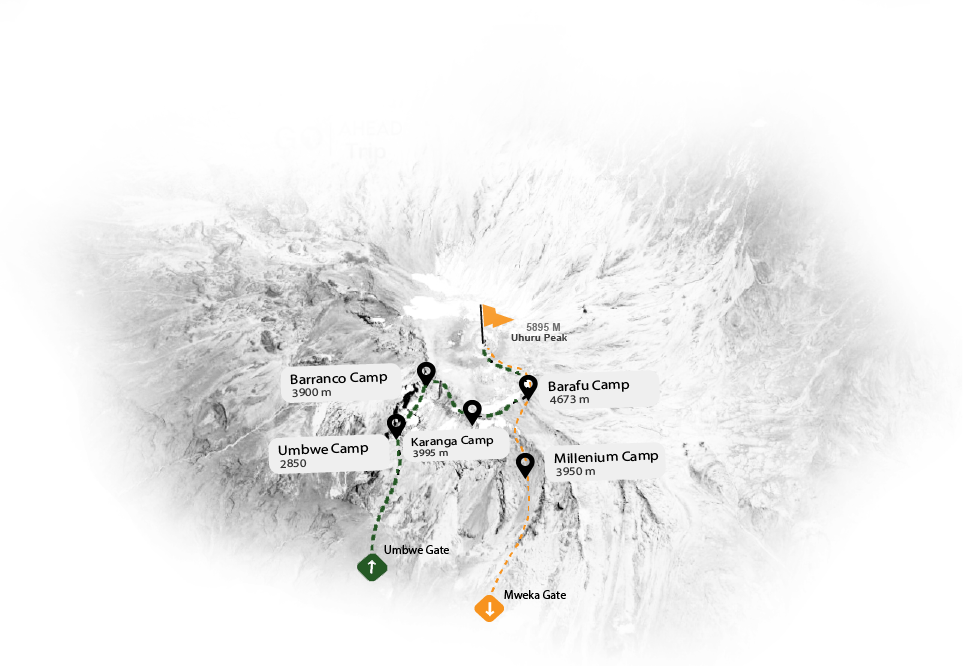
Discover Your Path to the Summit
Every journey up Kilimanjaro is unique. We've curated the most spectacular routes to match your experience level, schedule, and appetite for adventure.
.jpg)
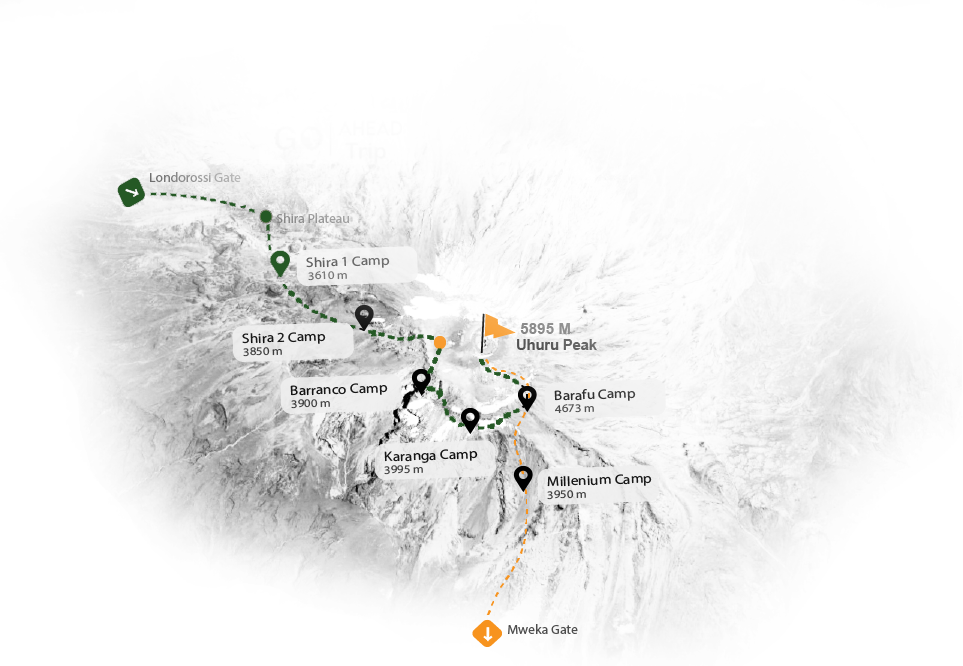
Lemosho Route
The most scenic and comprehensive route, offering excellent acclimatization and breathtaking panoramas across the Shira Plateau.
View Route details.jpg)
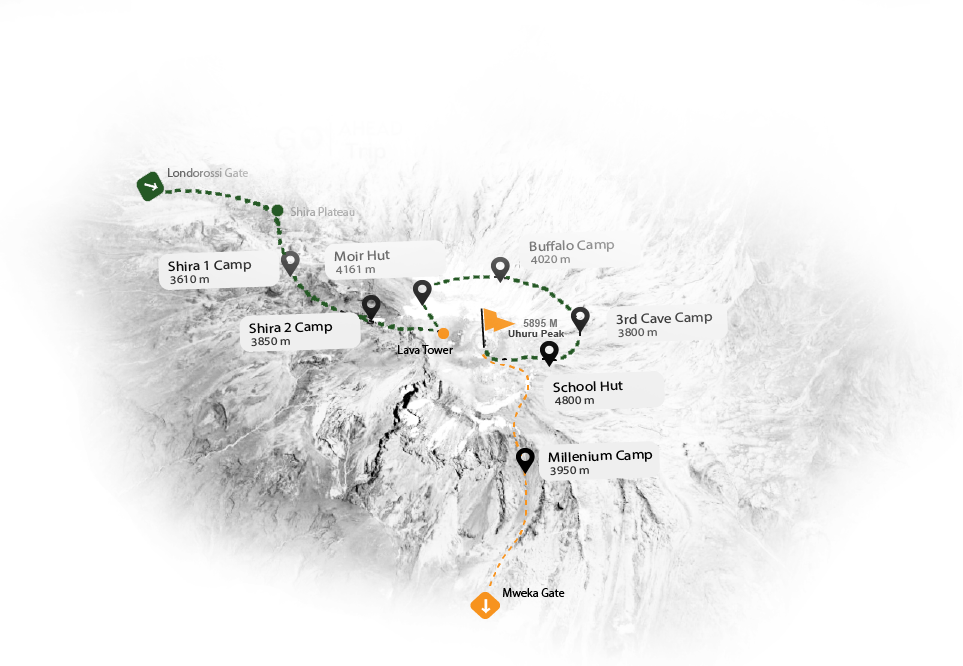
Machame Route
Known as the "Whiskey Route," this popular path offers stunning diverse landscapes and great climb high, sleep low opportunities.
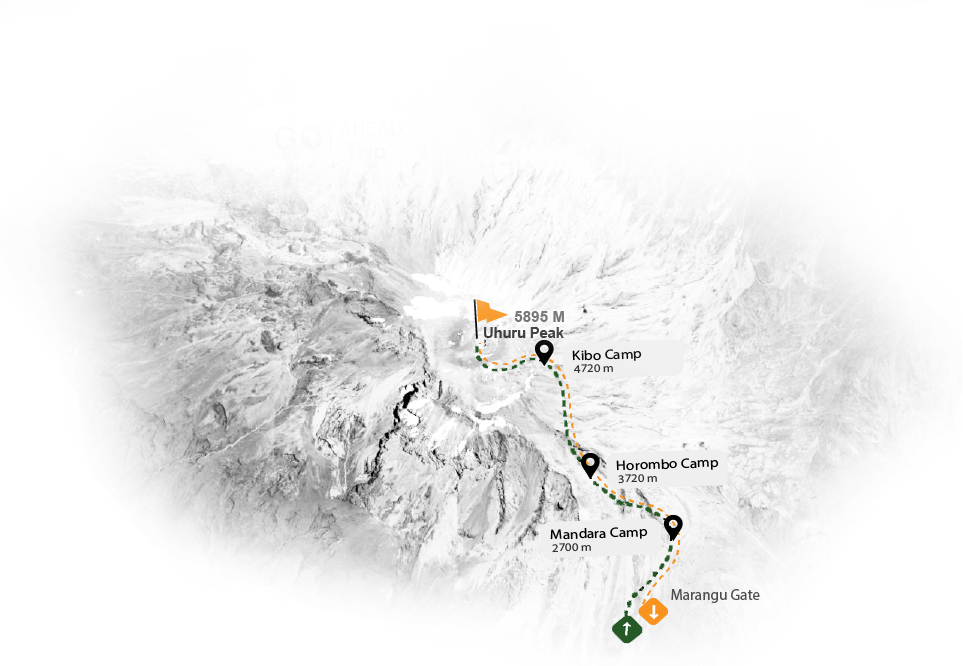
View Route detailsMarangu Route
The "Coca-Cola Route" is the only path featuring comfortable hut accommodations, providing a gentler, more direct ascent.
View Route details.jpg)
Rongai Route
The only northern approach to the mountain. It’s wilder, receives less rainfall, and offers spectacular views of the Kenyan plains.
View Route details.jpg)
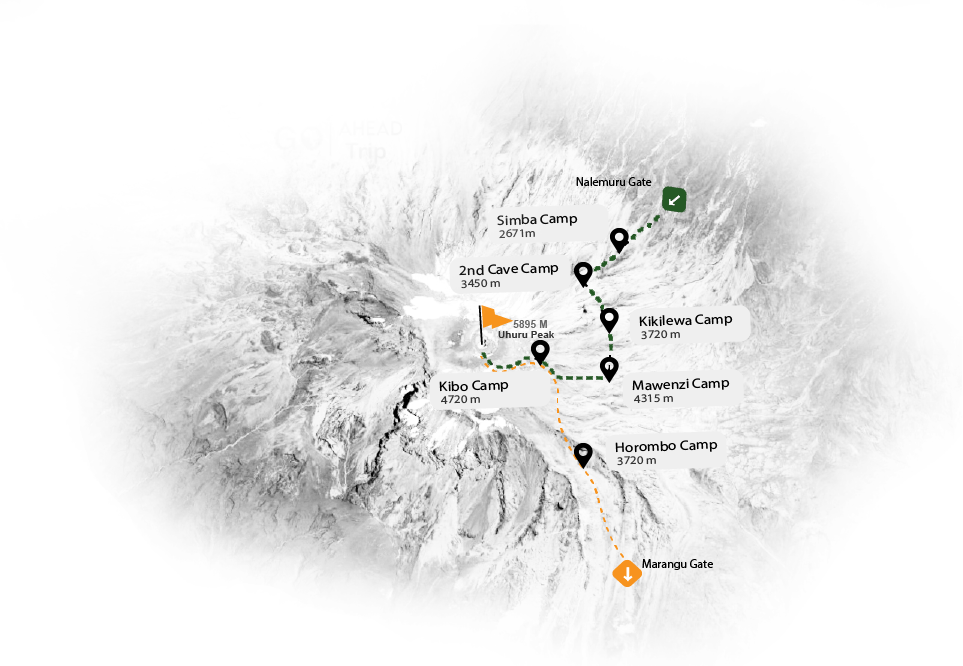
Northern Circuit
The longest and newest route, traversing the tranquil northern slopes. Unparalleled acclimatization and incredible 360-degree scenery.
View Route detailsWhat You Need to Know Before Climbing Kilimanjaro
Conquering the Roof of Africa requires careful planning, proper acclimatization, and the right gear. Success isn't just about physical fitness — it's about mental endurance, choosing the correct route, and trekking with an experienced team that prioritizes your safety at every step.
Physical Fitness & Training
Kilimanjaro is a non-technical climb, but it demands a solid fitness foundation. You don't need to be a professional athlete, but building cardiovascular endurance through hiking, running, stair climbing, and cycling for at least 3–6 months before your climb will dramatically improve your summit odds. Focus on long-distance hikes with elevation gain, and train consistently. A strong, conditioned body copes with altitude stress, exhaustion, and temperature extremes far better than an unprepared one — and it directly affects how much you enjoy the journey.
Understanding Altitude & Acclimatization
The greatest obstacle on Kilimanjaro is not the terrain — it is the altitude. At 5,895 meters, the thin air contains significantly less oxygen than at sea level, and Acute Mountain Sickness (AMS) leads to the majority of failed summit attempts. Choosing a longer route with a gradual ascent profile, such as the Lemosho or Northern Circuit, gives your body the critical time it needs to acclimatize. The guiding principle of "climb high, sleep low" is the cornerstone of a safe and successful high-altitude experience.
.jpg)
Essential Gear & Packing
The mountain takes you through five distinct ecological zones — from tropical rainforest at the base to an arctic desert at the summit. This means your packing list must cover a wide range of conditions. You'll need lightweight, breathable hiking layers for the lower slopes and heavy-duty insulated gear for summit night, where temperatures can drop to -20°C or below. Key items include quality waterproof trekking boots, thermal base layers, a down jacket, a warm sleeping bag, trekking poles, and a reliable headlamp with fresh batteries. Never underestimate the importance of proper gear; it can make the difference between reaching the summit and turning back.
Best Time to Climb
Kilimanjaro can be climbed throughout the year, but there are two primary windows that offer the most favorable conditions. The first is January through March, which provides clear skies, cold but manageable temperatures, and fewer crowds. The second and most popular season is June through October, when the air is dry and mountain visibility is at its best. The two rainy seasons — April to May and November — bring heavy precipitation to the southern slopes. However, if you choose the Rongai Route, which approaches from the drier northern side, it remains a viable option during these wetter months.
.jpg)
How Much Does It Cost to Climb Mount Kilimanjaro?
The total cost of climbing Kilimanjaro varies depending on the route you choose, the number of days, the operator's level of service, and any additional experiences you add. Generally, a full guided climb with a reputable operator ranges from around $2,000 to $5,500 USD per person, all-inclusive. This covers park fees (which alone stand at roughly $700–$900), a licensed guide and porter team, accommodation, meals on the mountain, safety equipment, and transfers. It is strongly recommended not to cut corners on costs — a well-staffed, experienced guiding team is the single most important investment in your summit success and safety. Wildboar Safaris offers transparent, competitive pricing with no hidden fees and premium support throughout your climb.
How Should I Train to Climb Kilimanjaro?
Training for Kilimanjaro should begin at least 3 to 6 months before your departure date. The goal is to build strong aerobic fitness and leg endurance so your body is prepared for 5 to 9 consecutive days of hiking with a daypack at altitude. Start with 3–4 days of cardio per week — brisk walking, jogging, or cycling — and gradually introduce longer weekend hikes on uneven terrain. Stair climbing is particularly effective for developing the specific muscle groups used on the mountain. As your departure approaches, aim for hikes of 4–6 hours with some elevation gain. If possible, plan a high-altitude training hike or spend a night at altitude to help your body begin adapting before you even arrive in Tanzania.
Talk to Our Kilimanjaro Experts
Every climb is unique. Our experienced Kilimanjaro specialists are available to answer your questions, recommend the best route for your fitness level, and help you build a customised itinerary that sets you up for a successful summit.
Frequently Asked Questions
Everything you need to know about climbing Mount Kilimanjaro — from permits to porters, altitude sickness to summit success.
Do I need a guide or can I climb Kilimanjaro independently?
No, you cannot climb Kilimanjaro independently. The Tanzanian National Parks Authority (TANAPA) regulations require all trekkers to be accompanied by a licensed guide at all times. This rule exists for your safety — experienced guides are trained in altitude sickness recognition, emergency procedures, and mountain rescue. At Wildboar Safaris, all our guides are fully certified, first-aid trained, and have years of summit experience.
What is the success rate on Kilimanjaro?
The overall summit success rate on Kilimanjaro varies significantly by route. The overall average across all routes is around 65%, but this rises to 85–90% or higher on longer, better-acclimatizing routes like Lemosho and the Northern Circuit. Choosing the right route, proper training, and trekking with an experienced team are the three factors that most directly influence your odds of reaching Uhuru Peak.
Is altitude sickness a real concern on Kilimanjaro?
Yes, Acute Mountain Sickness (AMS) is the primary reason climbers fail to reach the summit. Symptoms include headache, nausea, dizziness, fatigue, and shortness of breath. AMS cannot be predicted based on fitness level — it can affect anyone, regardless of age or athletic ability. Selecting a route with a gradual ascent profile and acclimatization days significantly reduces your risk. Our guides monitor all climbers daily and are trained to recognize early symptoms and take appropriate action, including descent if necessary.
What should I eat and drink on the mountain?
Proper hydration and nutrition are critical to your performance and acclimatization on Kilimanjaro. You should drink 3 to 4 litres of water daily throughout the trek. All meals are prepared by our mountain cook team and consist of nourishing, calorie-rich food including hot breakfasts, packed lunches, and hearty dinners. We accommodate dietary requirements with advance notice. Many climbers lose their appetite at altitude, but it is important to eat even small amounts regularly to maintain energy levels.
How many porters will carry my gear?
Each client is assigned dedicated porters to carry their main duffel bag (maximum 15 kg including sleeping bag and gear), camp equipment, food, and cooking supplies. You carry only your daypack with essentials — water, snacks, sunscreen, camera, and a light layer. Our porters are paid fair and ethical wages in full compliance with the Kilimanjaro Porters Assistance Project (KPAP) standards, and they are provided with proper gear, food, and accommodation throughout the trek.
Do I need any vaccinations or medications before climbing?
There are no mandatory vaccinations specifically for climbing Kilimanjaro, but Tanzania does require proof of yellow fever vaccination if you are arriving from a country where yellow fever is present. It is strongly advisable to consult a travel health specialist at least 4–6 weeks before departure. Many climbers also discuss Diamox (Acetazolamide) with their doctor as a preventive measure for altitude sickness, though it is not a substitute for proper acclimatization and must be prescribed by a physician.