The Scenic Path to
Mount Kilimanjaro.
Widely considered the most beautiful route on the mountain, Lemosho offers panoramic views and excellent acclimatization for a successful summit.
Lemosho Route
Lemosho is widely considered the most beautiful route on Mount Kilimanjaro, offering panoramic views on various sides of the mountain. Our journey starts at the Lemosho Glades, winding through pristine rainforest where you might spot Colobus monkeys and exotic birds. This remote start ensures a quieter experience compared to the more crowded Machame and Marangu routes.
Exploring the diverse ecosystems is a highlight of this trek. As we ascend, the lush rainforest gives way to the vast heath and moorland of the Shira Plateau. You'll witness the dramatic transition from giant lobelias to the stark, volcanic beauty of the alpine desert. Each day brings a new landscape, making the Lemosho route a true visual feast for trekkers.
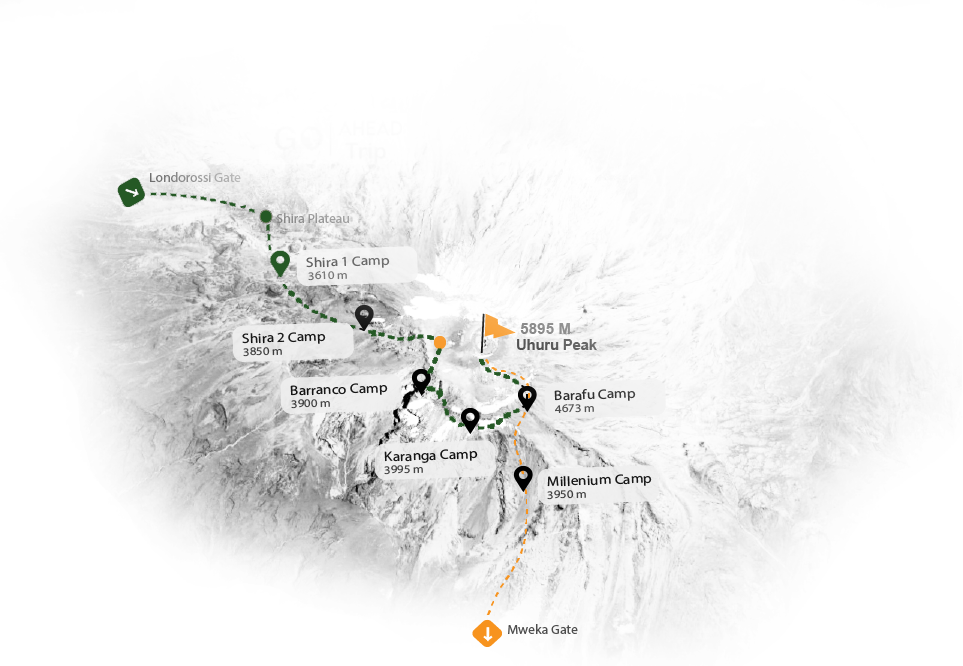
Maximum acclimatization is the key to Lemosho's high success rate. By choosing an 8-day itinerary, we allow your body time to adjust to the thinning air, significantly increasing your chances of standing on Uhuru Peak. The route approaches the summit from the west, crossing the Shira Plateau and joining the Machame route, providing a perfect balance of challenge and reward.
Expert Recommendations:
The 8-Day Advantage
Widely considered the premier route on Mount Kilimanjaro, the 8-day Lemosho trek offers the perfect balance of scenic beauty and physical preparation. Here is why our experts recommend this specific tour.
Maximum Acclimatization
The 8-day itinerary is the "Gold Standard" for safety. By allowing extra time to "climb high and sleep low," your body adjusts naturally to the altitude, pushing our summit success rate to over 95%.
Pristine Rainforest Start
Starting at the Lemosho Glades (2,100m), you begin your trek in a remote wilderness. This area is far less crowded than other routes, offering a peaceful first day with frequent Colobus monkey sightings.
The Shira Plateau
As you emerge from the forest, you cross the vast Shira Plateau. This UNESCO World Heritage site offers panoramic views and a sense of isolation that is truly unique to the western approach.
Lava Tower Training
Reaching the Lava Tower at 4,600m is a critical part of the expert strategy. Eating lunch at this height before descending to sleep at Barranco Camp (3,900m) is the secret to a headache-free summit night.
The Barranco Wall
Don't let the name intimidate you. This is a thrilling, non-technical scramble that is one of the most photographed parts of the mountain. It provides an incredible sense of achievement and stunning valley views.
Southern Circuit Scenery
By traversing the Southern Circuit, you see Mount Kilimanjaro from multiple angles. This route provides the most diverse volcanic landscapes, from the Alpine Desert to stark glaciers.
Summit Night Readiness
With 7 days of gradual ascent behind you, your red blood cell count reaches the optimal level. You'll start the final push to Uhuru Peak feeling stronger and more mentally prepared than on shorter routes.
A Celebratory Descent
The journey finishes through the lush Mweka Forest. After standing on the roof of Africa, this long but gentle descent allows you to reflect on your journey through the mountain's final ecosystem.
.jpg)
.jpg)
.jpg)
.jpg)
The Path to Uhuru Peak
Success on Kilimanjaro is a marathon, not a sprint. Proper acclimatization is the key to reaching the roof of Africa safely and enjoyably.
Detailed Daily Program
We offer two variations of our Lemosho expedition. We strongly recommend the 8-day option for its superior acclimatization profile and higher success rate.
Day 01 Londorossi Gate to Mti Mkubwa
Your journey begins with a scenic drive to the Londorossi Gate. After completing the park registration, we ascend further to the Lemosho glades. The trek starts in the heart of a vibrant, emerald-green rainforest. As you wind through the ancient canopy, keep a watchful eye for Blue Monkeys and the elegant Black-and-White Colobus. The air is rich and humid, filled with the sounds of exotic birdlife as we make our way to the serene Mti Mkubwa (Big Tree) Camp, nestled comfortably within the forest's embrace.
Day 02 Mti Mkubwa to Shira 1 Camp
Today, the landscape transforms dramatically. We leave the dense rainforest behind and ascend into the high moorland zone. The trail becomes steeper as we cross several streams and navigate the hills of the Shira Ridge. You'll be introduced to Kilimanjaro’s unique flora, including the prehistoric-looking Giant Lobelias and heathers. Arriving at Shira 1 Camp, located on the western edge of the expansive Shira Plateau, you'll be rewarded with your first clear, breathtaking vistas of Kibo’s snow-capped peak glowing in the afternoon light.
Day 03 Shira 1 Camp to Shira 2 Camp
A day designed for both beauty and biological adaptation. We traverse the Shira Plateau—one of the highest plateaus on Earth—moving eastward toward the volcanic massif of Kibo. The trek is relatively gentle, allowing your body to settle into the increasing altitude. You'll walk over ancient lava flows and enjoy an unobstructed panoramic view of the Shira Needles. Reaching Shira 2 Camp by early afternoon, you have ample time to rest, hydrate, and even take a short acclimatization walk to higher ground to prepare for tomorrow's challenge.
Day 04 Shira 2 to Barranco (via Lava Tower)
This is a pivotal day for your summit success. We follow the principle of "climb high, sleep low" as we ascend to the iconic Lava Tower, a 300-foot volcanic plug at 4,600m. The terrain turns into a stark, lunar-like Alpine Desert. After a hot lunch at the tower, we descend into the beautiful Barranco Valley. This descent is visually stunning, taking you through gardens of strange, towering Senecio trees. While the day is physically demanding, it is the "Gold Standard" for triggering the red blood cell production needed for the final summit push.
Day 05 Barranco Camp to Karanga Camp
The day begins with a thrilling challenge: the Barranco Wall. Though it looks intimidating, it is a non-technical scramble that most trekkers find to be the highlight of the trip. At the top, you'll feel an immense sense of accomplishment and enjoy spectacular views of the Heim Glacier. From here, the trail follows a series of ridges and valleys, showcasing the rugged beauty of the southern circuit. We descend into the Karanga Valley before a short, steep climb to Karanga Camp, where we spend the night resting and fueling up.
Day 06 Karanga Camp to Barafu Camp
We leave Karanga and hit the junction that connects with the Mweka Trail. The trek continues up through the desolate Alpine Desert toward Barafu (Ice) Camp. The wind often picks up here, and the cold becomes more bitey, reminding you that the summit is near. Barafu is perched on a narrow, rocky ridge with stunning views of Mawenzi Peak to the east and Kibo to the west. We arrive by lunchtime to allow for a full afternoon of "pre-summit" rest. Your guides will conduct a final briefing as you prepare for the midnight departure.
Day 07 Barafu to Summit to Mweka Camp
The ultimate test of will and stamina. Under a blanket of stars at midnight, we begin the slow, rhythmic ascent toward the crater rim. The climb to Stella Point (5,756m) is the most mentally demanding part of the trek. As dawn breaks, the sun rises over the horizon, painting the glaciers in hues of pink and gold—a moment of pure magic. A final hour of trekking along the rim leads you to Uhuru Peak, the Roof of Africa. After a brief, emotional celebration, we begin the long descent to Mweka Camp, moving through scree and moorland into the forest.
Day 08 Mweka Camp to Mweka Gate
Your final morning on the mountain is a celebration of your achievement. We descend through the lush rainforest once more—this time with the pride of having stood at the summit. The air grows warmer and richer as we reach Mweka Gate, where you’ll sign out and receive your official gold certificates. We enjoy a final lunch with your incredible mountain crew, sharing stories and saying our goodbyes before we drive you back to Arusha for your first hot shower in over a week.
Day 01 Londorossi Gate to Mti Mkubwa
Our 7-day Lemosho adventure kicks off with park formalities at Londorossi Gate. We then traverse the initial forest track into the lush Kilimanjaro rainforest. The trail is alive with sound; you may hear the calls of the turaco or spot the elusive Colobus monkeys high in the canopy. We reach Mti Mkubwa (Big Tree) Camp by early evening, where the forest provides a vibrant, life-filled backdrop for your first night under the African stars.
Day 02 Mti Mkubwa to Shira 2 Camp
A challenging but rewarding day. We push through the remaining forest and emerge into the giant heather and moorland zone. This variation bypasses Shira 1, taking you further across the stunning Shira Plateau to Shira 2 Camp. The elevation gain is significant, making today a true test of endurance. You’ll be walking through gardens of Giant Lobelias, with a vast, lunar-like volcanic landscape unfolding as you reach the high Shira plateau, offering majestic afternoon views of Kibo.
Day 03 Shira 2 to Barranco (via Lava Tower)
Adhering to the "climb high, sleep low" philosophy, we trek across the Alpine Desert to the high-altitude Lava Tower (4,600m). Lunch at this massive volcanic plug provides crucial acclimatization. We then descend into the beautiful Barranco Valley, navigating through the unique Senecio forests. This descent is not just scenic; it’s a biological necessity, allowing your body to recover from the morning’s heights and prepare for the days ahead.
Day 04 Barranco Camp to Karanga Camp
Today’s highlight is the scramble up the famous Barranco Wall. It’s an exhilarating experience that rewards you with sweeping views of the Heim and Kersten Glaciers. From the top of the wall, we traverse a series of valleys and ridges toward Karanga Camp. The air is thinning, and the vegetation becomes sparse, but the constant views of the mountain’s southern face are awe-inspiring as we make our way toward the final base camp.
Day 05 Karanga Camp to Barafu Camp
We leave Karanga and ascend through the high-altitude desert to join the Mweka descent route. The trail continues up to Barafu Camp (Ice Camp), a rocky, wind-swept ridge with direct views of the summit. We arrive by midday to ensure you have plenty of time for a hot meal and restorative rest. This afternoon is about hydration and mental preparation for the grueling summit push that begins at midnight.
Day 06 Barafu to Summit to Mweka Camp
The midnight summit push. Climbing through the cold, thin air under a star-lit sky, we aim for Stella Point by sunrise. Watching the first light of day illuminate the glaciers is an experience you will never forget. A final hour of trekking along the crater rim brings you to Uhuru Peak—the highest point in Africa. After celebrating your victory, we begin the long, steep descent to Mweka Camp, changing through multiple ecosystems in a single afternoon.
Day 07 Mweka Camp to Mweka Gate
On your final day, we descend through the lush mountain rainforest to Mweka Gate. The warmth and oxygen return with every step. At the gate, we finalize park formalities and you’ll receive your commemorative climbing certificates. A final, emotional lunch with your trekking crew marks the end of your incredible journey before we drive you back to Arusha for celebration and a long-overdue hot shower.
Enquire Now
Planning your Lemosho expedition? Our experts are here to help you customize your trek.
What's Included
- Professional, Kilimanjaro-certified English-speaking mountain guides.
- Team of skilled porters and a professional cook to prepare all meals.
- All National Park gate fees, camping fees, and trekking permits.
- Full board on the trek: nutritious breakfast, lunch, and dinner.
- High-quality camping equipment (tents, mess tents, and sleeping mats).
- Emergency rescue fees (AMREF) and first-aid kits including oxygen.
- Arusha airport transfers and transport to/from the park gate.
What's Excluded
- International flights and airport taxes.
- Entry visas for Tanzania (obtainable at the airport).
- Personal trekking gear (sleeping bags, poles, hiking boots).
- Tips for the mountain crew (customary but optional).
- Travel and medical insurance (highly recommended).
- Alcoholic beverages and items of a personal nature.
Lemosho Route FAQs
Everything you need to know about trekking the most scenic route on Kilimanjaro.
How difficult is the Lemosho Route?
Lemosho is considered more difficult than Marangu but offers superior acclimatization. It features steep sections like the Barranco Wall, but the 8-day itinerary has one of the highest success rates on the mountain.
What is the success rate for Lemosho?
Our 8-day Lemosho trek maintains a 95%+ success rate. The extra time on the mountain allows for optimal red blood cell production, significantly reducing altitude-related risks.
Do I need technical climbing skills?
No. Kilimanjaro is a non-technical trek. While sections like the Barranco Wall involve light scrambling, no specialized rope or ice climbing skills are required.
How cold does it get at night?
At high camps, temperatures often drop to -10°C to -15°C (5°F to -5°F). We provide high-altitude insulated tents, but a quality four-season sleeping bag is essential.
What happens if I get altitude sickness?
Our guides monitor your oxygen saturation daily. If serious symptoms occur, our protocol is immediate descent. We carry backup oxygen tanks and have AMREF flying doctor rescue coverage for all treks.
Why choose 8 days over 7?
The 8th day is a dedicated acclimatization day on the Shira Plateau. This extra day is often the difference between reaching the summit comfortably and being forced to descend due to sickness.